
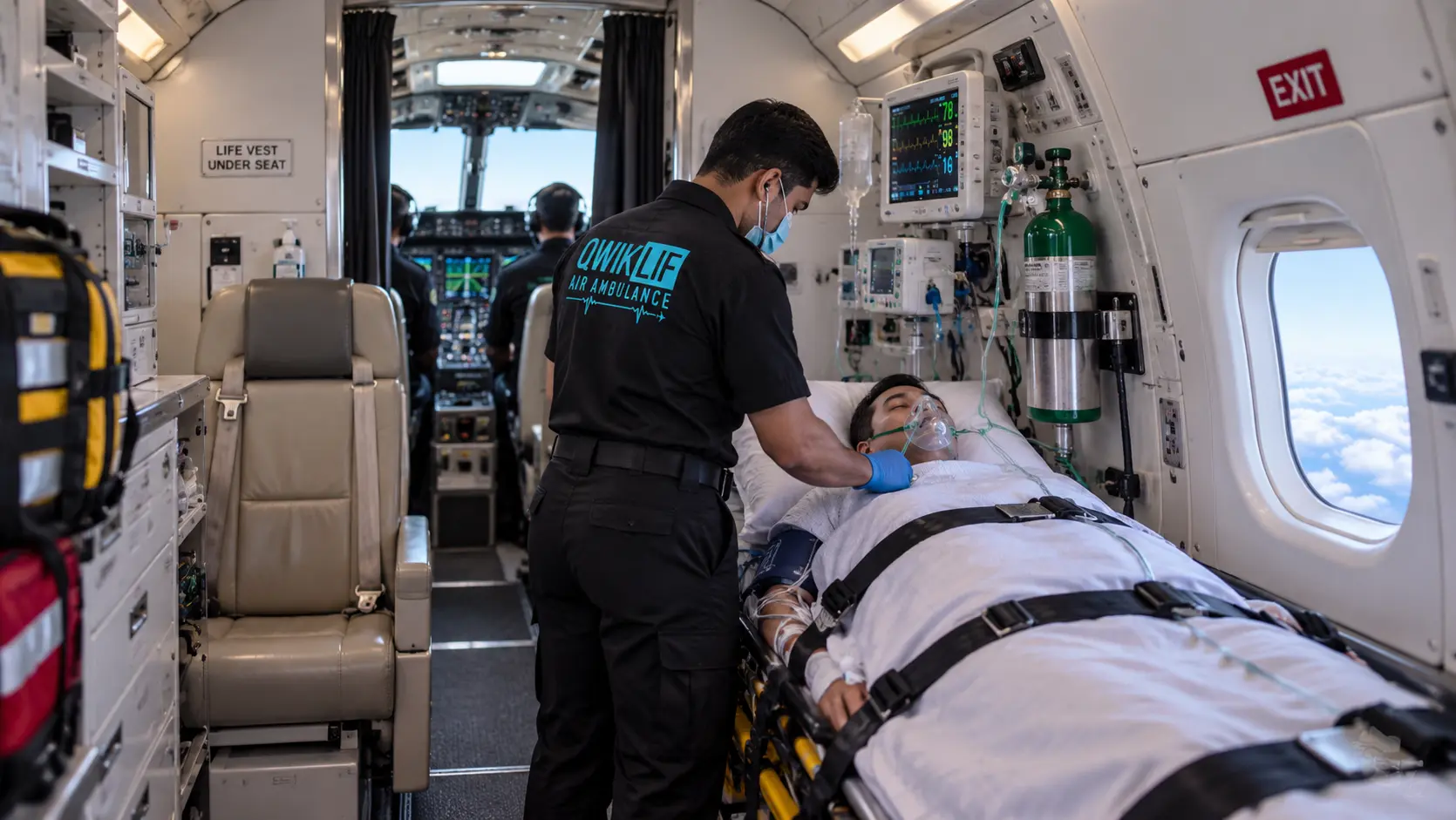
What Happens Inside an ICU Air Ambulance?
When a patient needs to travel a long distance while requiring continuous medical care, a regular commercial flight may not be suitable. An ICU air ambulance provides a medically equipped environment where patients can receive monitoring, treatment, and support throughout the journey.
But what actually happens inside an ICU air ambulance?
From pre-flight preparation to medical monitoring and hospital handover, every stage of an air ambulance transfer is carefully planned around the patient's condition.
What Is an ICU Air Ambulance?
An ICU air ambulance is an aircraft equipped to provide intensive medical care during patient transportation. Depending on the patient's needs, it may include:
- Patient monitoring systems
- Mechanical ventilators
- Oxygen supply
- Infusion and syringe pumps
- Defibrillators
- Emergency medications
- Suction and airway equipment
The exact equipment and medical team depend on the patient's medical condition.
What Happens Before the Flight?
An air ambulance service begins planning the transfer before the aircraft takes off.
The medical team reviews the patient's medical records, diagnosis, medications, mobility, and current level of support. The team then determines the appropriate medical equipment and healthcare professionals required for the journey.
For an international air ambulance transfer, additional arrangements may include hospital coordination, airport assistance, ground transportation, and other travel requirements.
How Is the Patient Prepared?
Before departure, the medical team assesses and stabilizes the patient as much as possible.
They may check:
- Heart rate and blood pressure
- Oxygen saturation
- Respiratory condition
- Level of consciousness
- Medication and oxygen requirements
The patient is then safely transferred to the aircraft and secured on the medical stretcher.
This preparation is an important part of critical care patient transport.
What Happens During the Flight?
A trained medical team stays with the patient throughout the medical flight.
Depending on the patient's condition, the team may include critical-care doctors, nurses, or experienced paramedics. They continuously monitor vital signs and provide treatments such as oxygen therapy, medication, ventilation, and fluid administration when required.
For critically ill patients, an intensive care air ambulance can provide the medical support needed during long-distance transportation.
Can Patients Travel on a Ventilator?
Some patients may require mechanical ventilation during an air ambulance transfer.
A transport ventilator provides breathing support while the medical team monitors the patient's respiratory condition and manages the ventilator according to their clinical requirements.
Similarly, oxygen requirements are calculated before the journey to ensure an appropriate supply is available throughout the flight.
What If the Patient's Condition Changes?
Even after stabilization, a patient's condition can change during transportation.
An ICU air ambulance carries appropriate emergency equipment and medications, allowing the medical team to assess and respond to changes during the journey.
The receiving hospital is also coordinated in advance so that care can continue promptly after landing.
What Happens After Landing?
The patient's care continues after the aircraft reaches its destination.
The patient may be transferred to a ground ambulance before being taken to the receiving hospital. The flight medical team then provides a detailed handover covering the patient's condition, treatment, and any significant changes during the journey.
This helps ensure continuity of care from the air ambulance transfer to the receiving medical facility.
Who May Need an ICU Air Ambulance?
An air ambulance for critically ill patients may be considered for people who:
- Cannot safely travel on a commercial flight
- Need continuous medical monitoring
- Have experienced serious trauma
- Require intensive medical support
- Need specialist treatment in another city or country
- Require mechanical ventilator
The appropriate method of transportation should always be determined according to the patient's medical condition.
How Qwiklif Supports ICU Air Ambulance Transfers
At Qwiklif Air Ambulance, each transfer is planned according to the patient's medical condition, destination, and transportation requirements.
Our team coordinates medical assessments, aircraft arrangements, medical equipment, and healthcare professionals. For international air ambulance transfers, we can also coordinate with hospitals, airports, and ground transportation providers.
Final Thoughts
An ICU air ambulance is a carefully coordinated medical environment in the sky. From pre-flight assessment and stabilization to continuous monitoring and hospital handover, every stage is designed around the patient's needs.
For families considering an air ambulance service, understanding the process can make the journey easier to navigate and help them make informed decisions about long-distance patient transportation.