
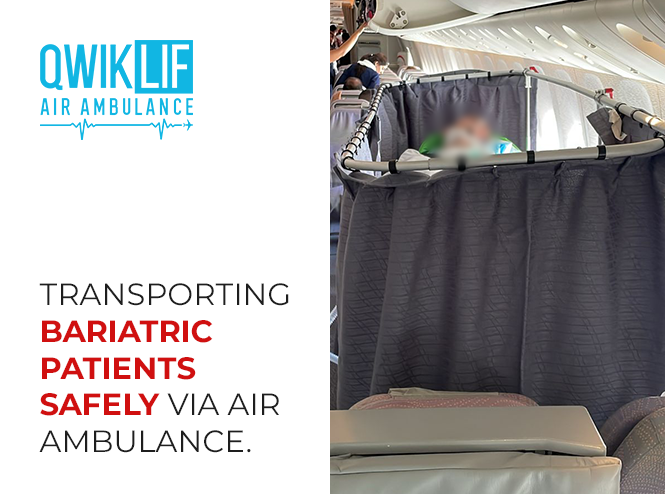
Transporting bariatric patients via air ambulance presents unique challenges that require meticulous planning, specialized equipment, and trained medical teams. Bariatric patients often have comorbidities such as cardiac issues, respiratory difficulties, or mobility limitations, which make safe handling and continuous monitoring essential. At Qwiklif Air Ambulance, we ensure that every bariatric transport is executed with precision, comfort, and adherence to international medical aviation standards.
Specialized Equipment and Aircraft Considerations
One of the first factors in bariatric patient transport is selecting the right aircraft and medical equipment. Stretchers must accommodate higher weight limits, and aircraft cabins must allow sufficient space for safe movement of staff and medical devices. Bariatric wheelchairs, hoists, and transfer systems are often required to move the patient safely from hospital to aircraft and vice versa. Properly securing the patient during flight is critical to prevent injury, while ensuring that monitoring equipment functions effectively throughout the journey.
Medical Assessment and Flight Team Preparation
Before transport, a comprehensive medical assessment determines the patient’s stability and identifies potential risks during the flight. This evaluation guides the composition of the medical team, which may include critical care nurses, paramedics, and a physician, depending on the patient’s condition. The team develops a detailed care plan covering ventilation support, oxygen therapy, and medication administration, ensuring that the patient receives continuous care at all times. Staff are also trained in safe lifting techniques and bariatric patient handling to minimize physical strain and risk during transfers.
In-Flight Monitoring and Critical Care
Bariatric patients often require continuous monitoring of vital signs, respiratory function, and cardiac status during flight. Modern air ambulances function as flying intensive care units, equipped with ventilators, infusion pumps, and advanced monitoring devices. The flight team is trained to respond immediately to any changes in patient condition, ensuring that the patient receives hospital-level care from departure to arrival. In-flight procedures are adapted for bariatric patients, including secure positioning, careful handling of intravenous lines, and ensuring adequate oxygenation throughout the journey.
Logistics and Ground Coordination
Transporting bariatric patients also involves careful ground coordination. From specialized stretchers and hoists at the hospital to bariatric-capable ambulances at the departure and arrival points, every stage must be planned to ensure safety and comfort. Airport handling, boarding, and landing procedures are coordinated with precision to prevent delays or stress to the patient. At the receiving facility, the medical team ensures a smooth bed-to-bed transfer, maintaining continuity of care throughout the journey.
Bariatric patient transport requires a combination of specialized equipment, trained medical personnel, and detailed planning. At Qwiklif Air Ambulance, our focus on safety, comfort, and continuous care ensures that even complex bariatric transfers are executed efficiently and reliably.