
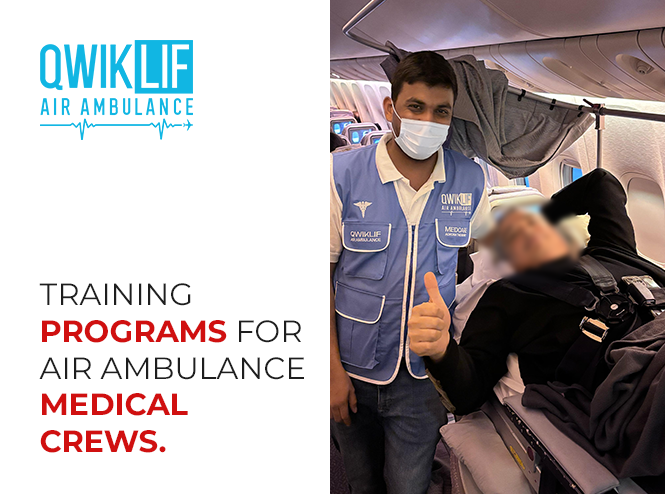
Delivering safe and effective air ambulance services requires more than advanced aircraft and medical equipment—it depends on the expertise and readiness of highly trained professionals. Air ambulance medical crews, including flight doctors, flight nurses, and paramedics, operate in dynamic and high-pressure environments where every second counts. At Qwiklif Air Ambulance, comprehensive training programs for medical crews ensure that teams are fully prepared to manage complex in-flight medical emergencies and provide exceptional critical care air transport.
The Importance of Specialized Air Medical Training
Unlike hospital settings, air medical transport presents unique challenges such as limited space, changing cabin pressure, and restricted access to additional resources. Medical crews must be trained to adapt quickly while maintaining high standards of care.
Specialized air ambulance training programs focus on:
- Delivering critical care in confined environments
- Managing medical emergencies at altitude
- Understanding aviation safety protocols
- Coordinating with flight crew and operations teams
This specialized knowledge is essential for ensuring safe and efficient medical flights.
Simulation-Based Emergency Training
One of the most effective components of air ambulance crew training is simulation-based learning. Realistic training scenarios prepare medical teams to respond confidently to emergencies that may occur during flight.
At Qwiklif Air Ambulance, simulation training includes:
- Handling cardiac emergencies and resuscitation
- Managing respiratory failure and ventilator support
- Responding to mid-air medical crises
- Practicing emergency evacuation procedures
These simulations help build confidence and improve decision-making during real-life critical care situations.
Advanced Clinical Skills and Certifications
Air ambulance medical crews are required to maintain high levels of clinical expertise. Training programs include ongoing education and certifications to ensure up-to-date knowledge and skills.
Key areas of focus include:
- Advanced Cardiac Life Support (ACLS)
- Basic Life Support (BLS)
- Trauma care and emergency medicine
- Neonatal and pediatric life support
Continuous learning ensures that crews are equipped to handle a wide range of medical conditions during air transport.
Aviation and Safety Training
In addition to medical expertise, crew members must understand the fundamentals of aviation safety. Working onboard an aircraft requires knowledge of flight operations, safety procedures, and emergency protocols.
Training includes:
- Aircraft safety procedures
- Use of onboard medical equipment
- Understanding cabin pressure and oxygen systems
- Emergency response during aviation incidents
This ensures that medical crews can operate safely within the aviation environment.
Communication and Team Coordination
Effective communication and teamwork are critical in air ambulance missions. Medical crews must coordinate closely with pilots, dispatch teams, and ground staff to ensure smooth operations.
Training programs emphasize:
- Clear medical communication protocols
- Coordinated team-based patient care
- Efficient handover procedures with hospital teams
- Real-time decision-making and problem-solving
Strong teamwork ensures seamless critical care transport from departure to arrival.
Continuous Improvement and Readiness
The field of air medical transport is constantly evolving, making continuous training essential. Regular assessments, refresher courses, and updated protocols help maintain high standards of care.
At Qwiklif Air Ambulance, ongoing training and skill development ensure that medical crews remain prepared for even the most complex missions.
Because in high-risk environments, expert training is the foundation of life-saving care in the sky.