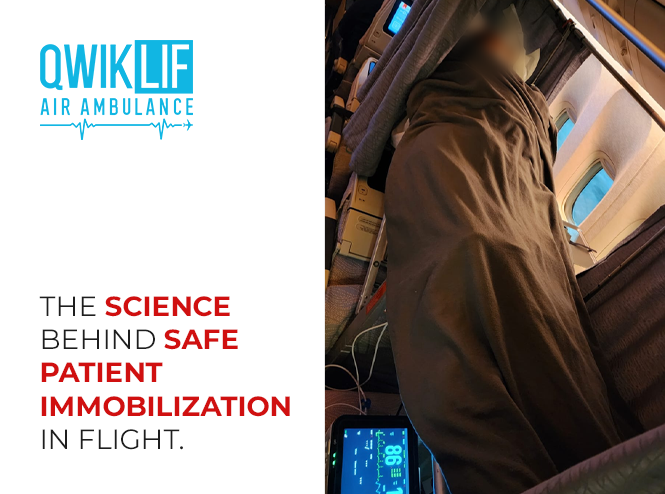
The Science Behind Safe Patient Immobilization in Flight
Published March 17, 2026 Medically Verified 5 min read
Safe immobilization is a cornerstone of air medical transport, ensuring that patients with injuries or critical conditions remain stable and protected throughout the journey. At Qwiklif Air Ambulance, every critical care transport mission is supported by protocols that combine medical expertise, advanced equipment, and in-flight monitoring to minimize the risk of further injury.
Understanding Patient Risks During Flight
Even minor movements in-flight can worsen fractures, spinal injuries, or internal trauma. Turbulence, takeoff, and landing introduce forces thatcan compromise patient safety if proper immobilization is not applied.
Patients requiring immobilization often include those with:
Spinal injuries or suspected fractures
Severe trauma from accidents
Neurological impairments affecting mobility
Post-surgical patients needing strict positioning
Proper immobilization is crucial for preventing complications such as secondary injuries, nerve compression, or circulatory issues.
Advanced Immobilization Equipment
Air ambulance aircraft are equipped with specialized devices designed to keep patients stable and comfortable:
Adjustable stretchers with locking mechanisms
Cervical collars and head immobilizers
Vacuum mattresses that mold to the patient’s body
Safety straps and padding to prevent pressure injuries
These tools allow medical teams to customize immobilization according to patient size, injury type, and medical requirements.
Continuous In-Flight Monitoring
Immobilization is not static—it requires ongoing assessment and adjustment: