
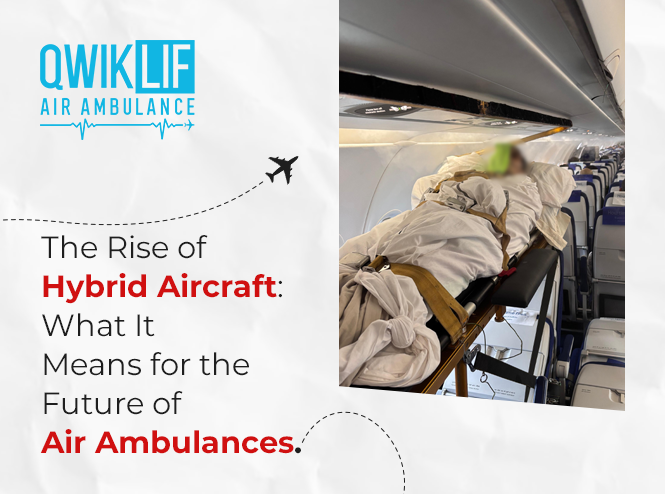
The future of aviation is undergoing a remarkable transformation, and at the center of this change lies the hybrid aircraft—a revolutionary blend of traditional fuel engines and electric propulsion systems. For industries like medical aviation, where speed, efficiency, and sustainability are vital, this innovation is opening exciting possibilities. At Qwiklif Air Ambulance, we believe hybrid aircraft could reshape the way critical care is delivered in the skies.
Why Hybrid Aircraft Matter
Hybrid aircraft combine the power of conventional engines with the efficiency of electric systems. This not only reduces fuel consumption and emissions but also creates quieter, smoother flights. For air ambulance missions, these advancements could make operations more environmentally responsible while still maintaining the urgency required for life-saving transfers.
Benefits for Air Ambulance Services
- Extended Range and Reliability
Hybrid propulsion provides backup power sources, minimizing risks of downtime and allowing long-distance transfers without interruptions. Patients in remote or underserved regions could be reached more efficiently. - Reduced Noise and Vibration
A quieter cabin environment is not just about comfort—it’s crucial for pediatric, neonatal, and critical care patients who are sensitive to stress. Hybrid aircraft can offer a calmer atmosphere, improving patient stability during transport. - Lower Operational Costs
Reduced fuel usage means lower running expenses, enabling providers like Qwiklif to make services more accessible without compromising quality. - Environmental Responsibility
With growing awareness of carbon footprints, hybrid aircraft align with the global push for greener solutions, positioning Qwiklif at the forefront of sustainable air ambulance operations.
Challenges to Overcome
Of course, adopting hybrid aircraft comes with challenges. Infrastructure for charging and maintenance needs to expand, and aviation regulations must evolve to support new technologies. Yet, as innovation advances, these barriers are steadily being addressed.
A Future in Motion
At Qwiklif Air Ambulance, we continuously adapt to the latest innovations in aviation and medical technology. The rise of hybrid aircraft is more than an industry trend—it represents a new horizon where speed, sustainability, and safety converge. For our patients and their families, this means greater trust that life-saving care will always be delivered quickly, responsibly, and reliably.
Hybrid aircraft are not just changing the skies; they’re redefining the future of air ambulance missions, ensuring that tomorrow’s emergency care will be even more advanced, compassionate, and sustainable.