
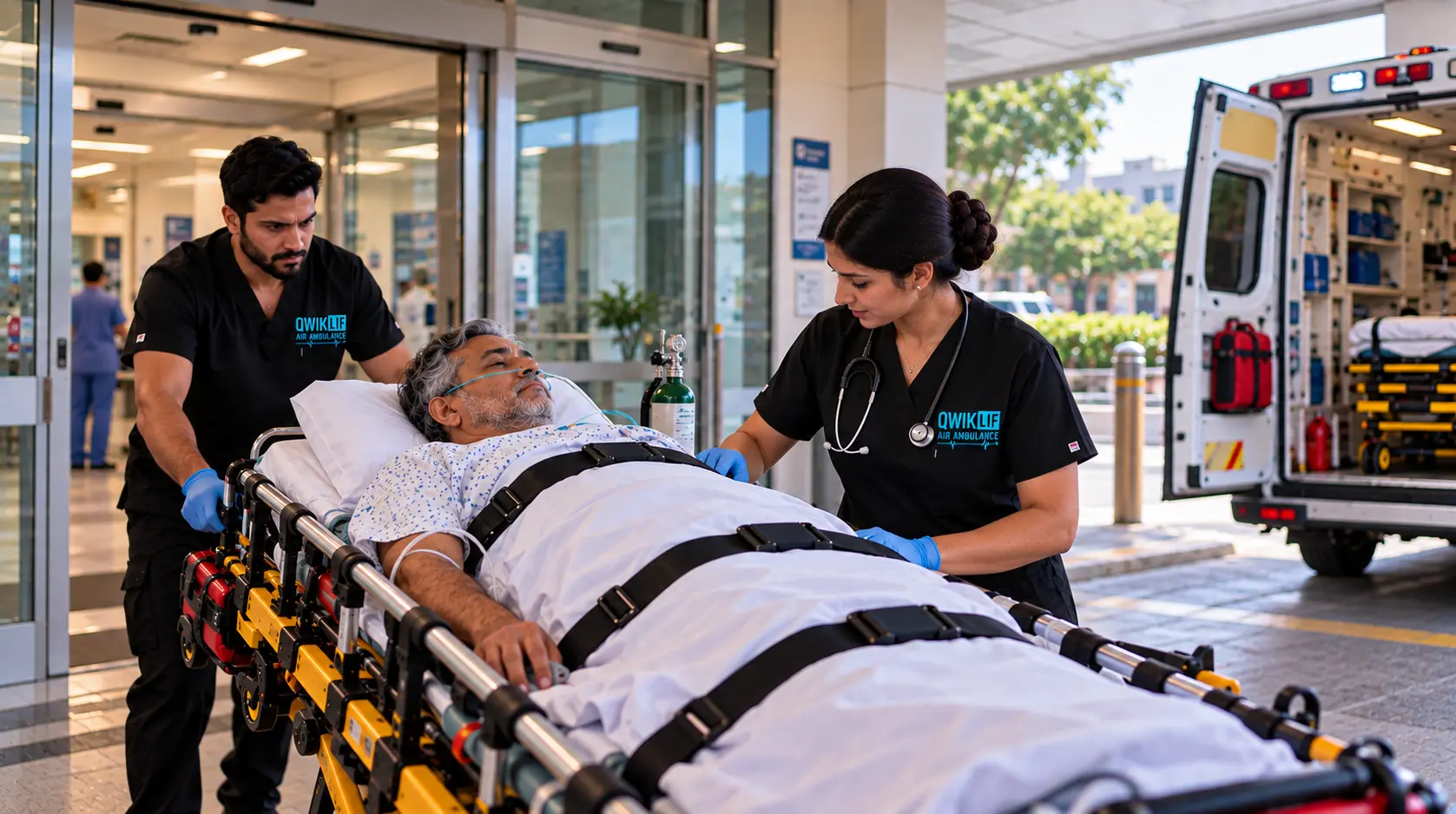
A bed-to-bed medical transfer involves much more than an ambulance and an aircraft. It requires careful coordination between medical teams, hospitals, ground transportation, airports, airlines, and documentation.
The typical journey may look like this:
Origin Hospital → Ground Ambulance → Airport → Air Medical Transport → Destination Airport → Ground Ambulance → Receiving Hospital
Medical Assessment Comes First
Before travel, the patient's medical records and condition are reviewed to determine the appropriate mode of transportation. Depending on the patient's needs, this may include a dedicated air ambulance, commercial stretcher transfer, or medical escort.
Ground and Hospital Coordination
The journey starts at the patient's bedside. An appropriately equipped ground ambulance transports the patient to the airport while the sending and receiving hospitals coordinate medical records, admission arrangements, and clinical handover.
Flight and Airport Logistics
International air ambulance transfers may require flight planning, medical clearances, MEDIF documentation, airport coordination, immigration formalities, and applicable landing or overflight permissions.
Medical Equipment and Crew
Depending on the patient's condition, equipment such as ventilators, monitors, oxygen systems, infusion pumps, and defibrillators may be required. Doctors, nurses, or paramedics can provide medical monitoring and support throughout the journey.
The Transfer Ends at the Receiving Hospital
Landing is only one stage of the journey. The patient must be transferred to the destination ground ambulance, transported to the receiving hospital, and handed over to the medical team.
Why Coordination Matters
Every stage of bed-to-bed medical transport needs to work together. Delays, missing documents, or poor communication can affect the entire transfer.
QwikLif Air Ambulance coordinates air medical transportation, medical repatriation, commercial stretcher transfers, medical escorts, dedicated air ambulance services, and ICU ground ambulance arrangements to support patients throughout their journey.
The real work behind a medical flight is the coordination that connects the first bedside to the receiving hospital.