
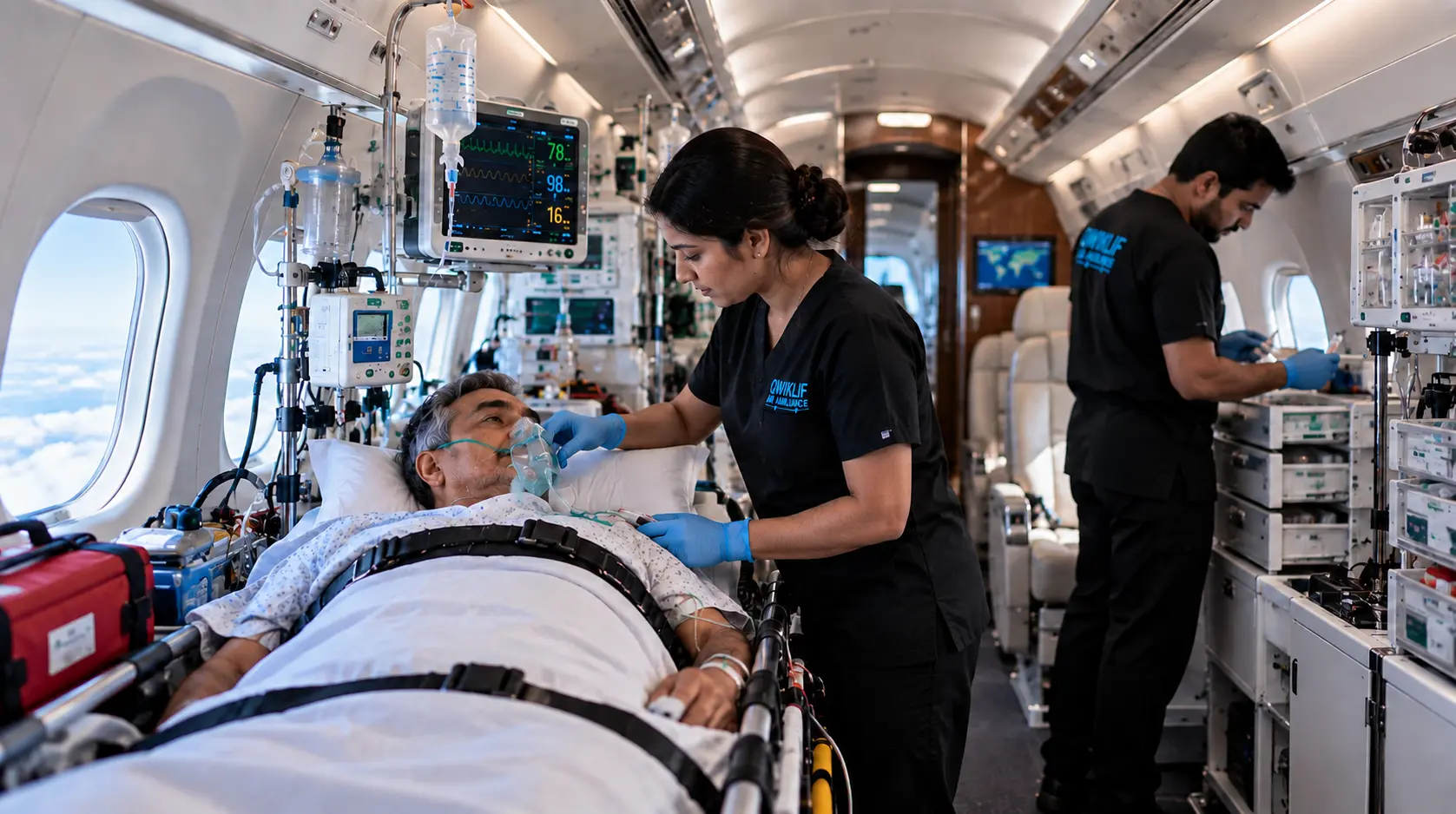
Medical air transport involves more than moving a patient from one location to another. During a flight, a patient's condition can change unexpectedly, which is why the medical team must be prepared to respond quickly and safely.
Reviewing the Patient Before the Flight
Preparation begins before takeoff. The medical team reviews the patient's medical history, current condition, medications, vital signs, and treatment requirements. This helps the team identify possible risks and prepare an appropriate air ambulance medical plan.
Checking Medical Equipment
Every transfer requires equipment suited to the patient's condition. Depending on the case, the team may prepare monitoring devices, oxygen systems, ventilators, infusion pumps, defibrillators, or other critical-care equipment. Equipment is checked before departure to ensure it is ready for use during the flight.
Preparing for Changes in Patient Condition
A patient's condition may change because of their underlying illness, cabin environment, or other factors. Medical professionals continuously monitor important parameters throughout the journey. If a change occurs, they can provide appropriate treatment based on the patient's medical requirements.
Having Backup Plans
Unexpected situations require more than one solution. The medical team considers possible complications before departure and prepares medications, equipment, documentation, and clinical procedures accordingly. Coordination with the receiving hospital also helps ensure that the patient's care can continue smoothly after landing.
Communication During the Journey
Medical teams remain connected with the operations team and, when required, other healthcare professionals. Clear communication allows important updates to be shared and helps coordinate ground ambulance services, hospital admission, and other arrangements at the destination.
Prepared for Every Stage of the Journey
A successful medical flight depends on preparation before takeoff, careful monitoring during the flight, and coordinated care after landing. Experienced air ambulance teams combine clinical knowledge, appropriate equipment, and contingency planning to manage changing medical needs throughout the journey.
For patients requiring specialized air ambulance services, careful preparation can help create a more organized and medically supported transfer from the initial hospital to the receiving facility.