Planning an air ambulance transfer involves more than arranging an aircraft. A patient’s weight, medical condition, and required equipment all play an important role in preparing a safe medical flight.
Patient Weight and Aircraft Planning
Patient weight can affect aircraft selection, stretcher capacity, loading arrangements, and overall payload. The total weight of the patient, medical team, stretcher, equipment, oxygen, and supplies must be considered before the flight.
For patients with higher body weight, the team may also need to check cabin space, stretcher dimensions, and suitable loading equipment.
Medical Equipment Requirements
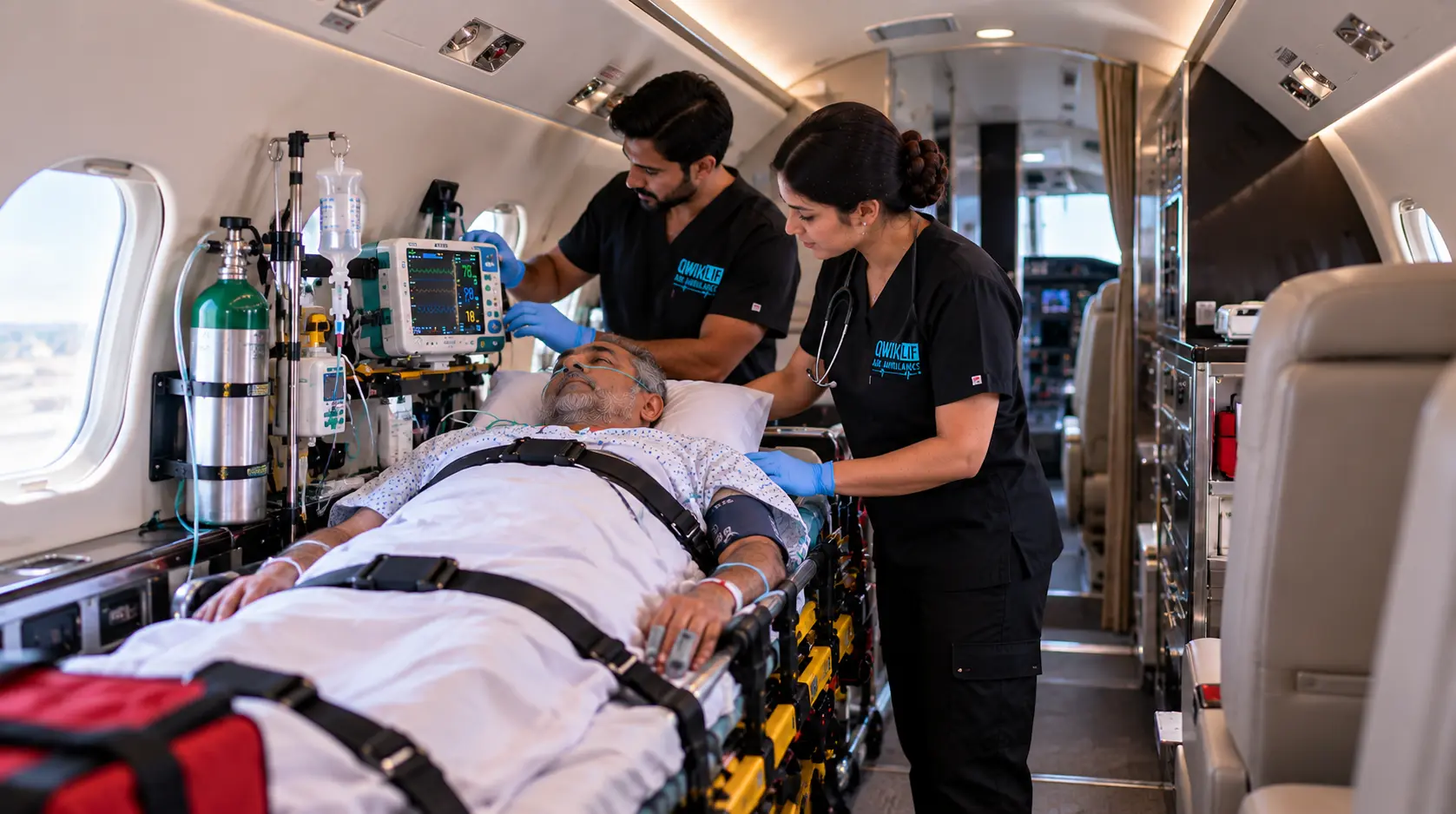
The patient’s condition determines the equipment needed during the journey. A ventilated patient, for example, may require a transport ventilator, oxygen, monitors, infusion pumps, and emergency medical supplies.
All equipment must be appropriate for air transport, securely positioned, and accessible to the medical team throughout the flight.
Why Accurate Information Matters
Before arranging an air medical transport, details such as the patient’s weight, height, diagnosis, oxygen requirements, medications, and current medical condition should be shared with the medical team.
This information helps determine the appropriate aircraft, medical crew, equipment, and ground support.
Conclusion
Patient weight and medical equipment directly influence how an air ambulance transfer is planned. Accurate medical information allows the transport team to prepare the right resources and coordinate the journey from hospital to hospital safely.
QwikLif Air Ambulance provides international air medical transport, including dedicated ICU flights, commercial stretcher transfers, medical escorts, and bed-to-bed patient transportation.