
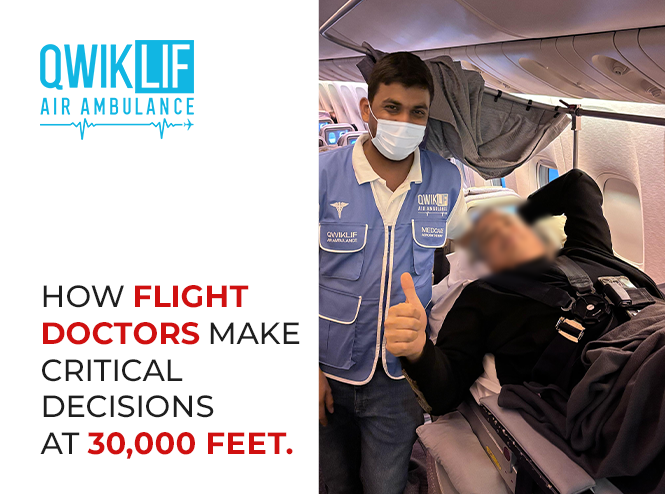
Delivering medical care at cruising altitude requires more than clinical expertise—it demands rapid decision-making, aviation awareness, and the ability to manage emergencies in a highly controlled environment. At Qwiklif Air Ambulance, flight doctors are trained to make life-saving medical decisions at 30,000 feet, where resources are limited and conditions can change quickly.
The Unique Challenges of In-Flight Medicine
Medical care in the air differs significantly from hospital-based treatment. Reduced cabin pressure, lower oxygen levels, and restricted space can impact patient stability. Flight doctors with Qwiklif Air Ambulance must anticipate how altitude affects conditions such as cardiac disease, respiratory distress, neurological injuries, and trauma while continuously adapting treatment strategies.
Advanced Pre-Flight Medical Planning
Critical decisions begin long before takeoff. Qwiklif Air Ambulance flight doctors conduct a detailed pre-flight medical assessment, reviewing diagnoses, imaging, laboratory results, and treatment plans. Based on this evaluation, doctors determine medical equipment requirements, oxygen flow needs, medication protocols, and contingency plans to manage potential in-flight complications.
Real-Time Decision-Making During Flight
Once airborne, flight doctors rely on continuous patient monitoring and clinical judgment to make immediate decisions. Vital signs, oxygen saturation, and neurological status are assessed in real time. In the event of deterioration, Qwiklif Air Ambulance’s medical teams adjust ventilation settings, administer emergency medications, or perform advanced life-support interventions—all while coordinating with pilots regarding flight conditions.
Balancing Medical Needs with Aviation Safety
Flight doctors work closely with pilots to ensure medical decisions align with aviation safety protocols. Factors such as turbulence, altitude changes, and emergency landing options are considered before implementing interventions. At Qwiklif Air Ambulance, this collaboration ensures patient care is delivered without compromising flight safety.
Training, Experience, and Protocol-Driven Care
Flight doctors undergo specialized training in aeromedical physiology, critical care, and emergency response. Qwiklif Air Ambulance emphasizes simulation-based training and strict clinical protocols, allowing doctors to act confidently under pressure. Experience plays a vital role in recognizing early warning signs and making timely, informed decisions.
Why Expertise at Altitude Matters
At 30,000 feet, there is no room for hesitation. The ability to combine medical expertise, situational awareness, and teamwork defines successful outcomes. Qwiklif Air Ambulance flight doctors ensure patients receive hospital-level care in the sky, protecting lives when every second counts.