
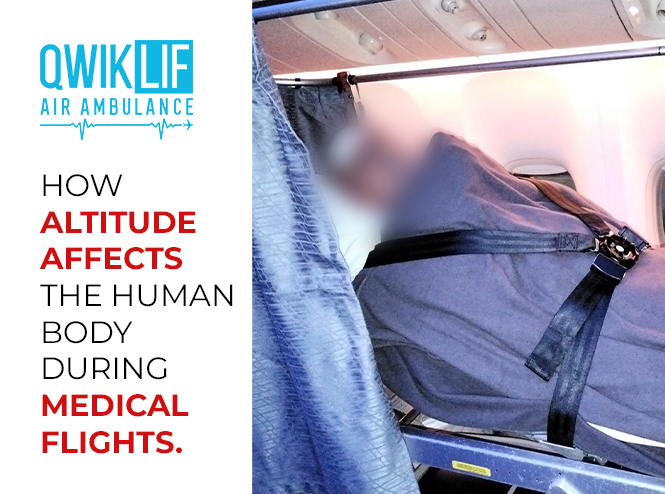
When patients are transported at high elevations during a medical flight, the body experiences physiological changes that can significantly impact health and stability. In air ambulance transport, altitude is not just an aviation factor — it directly affects oxygen levels, blood circulation, respiratory function, and overall patient safety. At Qwiklif Air Ambulance, understanding how altitude physiology influences critically ill patients is essential for delivering safe and effective critical care air transport.
Reduced Oxygen Levels at Higher Altitudes
As altitude increases, atmospheric pressure decreases, resulting in lower oxygen availability per breath. This condition, known as hypobaric hypoxia, can be dangerous for patients with:
- Chronic respiratory diseases
- Cardiac conditions
- Trauma-related injuries
- Neurological disorders
For such patients, even slight drops in oxygen saturation can lead to serious complications. That is why Qwiklif Air Ambulance aircraft are equipped with advanced oxygen delivery systems, high-performance ventilators, and continuous pulse oximetry monitoring to ensure stable oxygenation throughout the medical air transfer.
Gas Expansion and Pressure Changes
One of the most critical altitude-related concerns in air medical transport is gas expansion. According to Boyle’s Law, trapped air inside the body expands as cabin pressure decreases. This can affect patients with:
- Recent surgical procedures
- Chest trauma or pneumothorax
- Abdominal conditions
- Head injuries
Unmanaged expansion can increase pain or worsen medical conditions. At Qwiklif Air Ambulance, every patient undergoes a thorough pre-flight medical assessment to evaluate these risks. Cabin pressurization levels and flight altitude are carefully adjusted to minimize complications.
Cardiovascular and Circulatory Effects
Altitude can influence heart rate, blood pressure, and cardiac workload. For patients requiring cardiac monitoring or those recovering from heart attacks or cardiac surgery, these changes demand close supervision.
During every critical care flight, Qwiklif’s onboard medical team provides:
- Continuous ECG monitoring
- Real-time blood pressure tracking
- Immediate access to emergency medications
- Advanced life-support systems
Our aircraft cabins are pressurized for medical safety, reducing physiological stress while maintaining a stable environment for vulnerable patients.
Dehydration and Environmental Stress
Lower cabin humidity during long-distance medical transfers can cause dehydration, respiratory irritation, and discomfort. Proper fluid management, environmental regulation, and patient monitoring are essential components of safe air ambulance operations.
Precision Planning for Safe Air Ambulance Transfers
At Qwiklif Air Ambulance, altitude management is a structured medical decision — not a routine flight setting. Before every mission, our team evaluates:
- The patient’s diagnosis and stability
- Respiratory and cardiovascular status
- Surgical history
- Length of the flight
- Required in-flight medical equipment
By combining aviation expertise, critical care medicine, and meticulous planning, Qwiklif Air Ambulance ensures that altitude never compromises patient safety.