
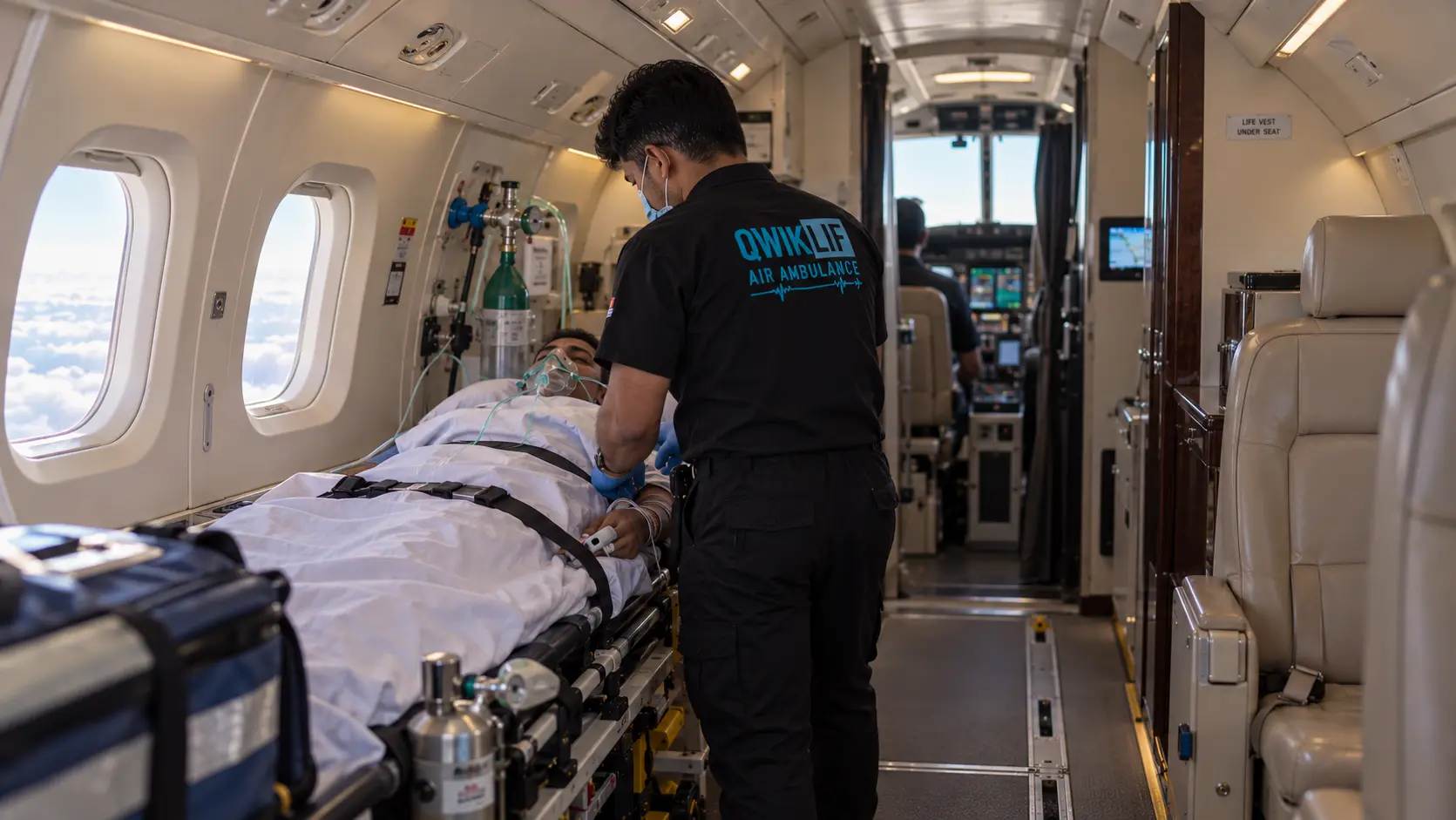
Long-distance medical flights require careful planning, advanced medical equipment, and experienced medical teams. A professional air ambulance company focuses on patient safety from the initial assessment until the patient reaches the destination hospital.
1. Detailed Medical Assessment
Before the flight, the medical team reviews the patient's condition, medical history, medications, oxygen requirements, and mobility. This helps determine the safest air medical transport option.
2. Choosing the Right Air Ambulance
Depending on the patient's condition and travel distance, the team may arrange a dedicated ICU aircraft or a commercial stretcher transfer with medical escort. The aircraft and medical setup are selected according to the patient's specific needs.
3. Advanced Medical Equipment
A well-equipped international air ambulance can carry essential ICU equipment such as ventilators, patient monitors, infusion pumps, oxygen systems, and other critical-care equipment.
4. Continuous Medical Monitoring
Patients are monitored throughout the flight by qualified doctors, nurses, or paramedics. Vital signs and medical needs are continuously assessed so that changes can be addressed quickly.
5. Experienced Medical Teams
Long-distance patient transfer by air requires medical professionals experienced in critical care and in-flight medicine. The team remains prepared to manage medical changes during the journey.
6. Bed-to-Bed Coordination
Safety does not end when the aircraft lands. Professional air ambulance services coordinate ground ambulances, airport transfers, and hospital admission to provide a smooth bed-to-bed transfer.
7. Emergency Planning
Before departure, the medical and operations teams plan for possible in-flight emergencies, route requirements, medical equipment, oxygen supply, and destination arrangements.
Safe Air Medical Transport Requires Planning
A long-distance air ambulance transfer is more than simply flying a patient from one location to another. Careful medical assessment, experienced teams, advanced equipment, and coordinated ground support help make international medical transportation safer and more efficient.