
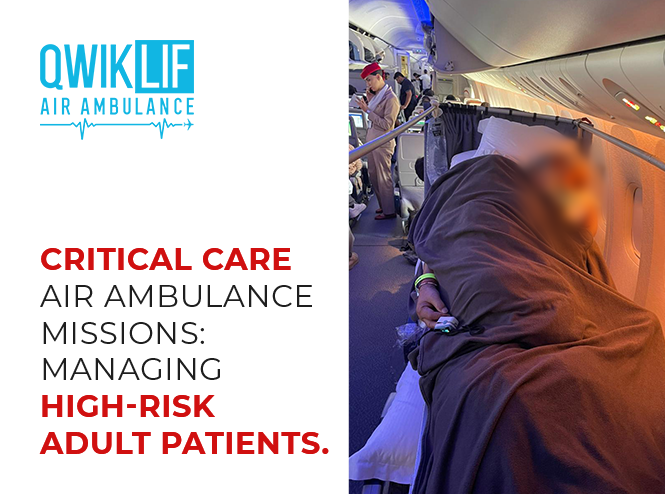
Critical care air ambulance missions involve the transport of high-risk adult patients who require advanced medical support, continuous monitoring, and rapid intervention during transit. These patients often suffer from life-threatening conditions such as severe trauma, cardiac emergencies, respiratory failure, neurological disorders, or multi-organ complications. At Qwiklif Air Ambulance, critical care missions are executed with a strong emphasis on clinical excellence, patient safety, and seamless coordination.
Detailed Medical Evaluation and Risk Stratification
Every critical care transfer begins with a comprehensive medical review. Patient stability, diagnosis, ventilatory needs, medication infusions, and potential risks are carefully assessed. This allows Qwiklif Air Ambulance to determine the appropriate level of care, medical crew composition, and aircraft configuration required for safe transport. Risk stratification ensures that all foreseeable complications are anticipated and prepared for before departure.
Specialized Critical Care Medical Teams
High-risk adult transfers demand highly experienced critical care professionals. Qwiklif Air Ambulance deploys flight physicians, intensive care nurses, and advanced paramedics trained in critical care medicine and aeromedical transport. These teams are equipped to manage airway emergencies, hemodynamic instability, cardiac events, and neurological deterioration during flight, ensuring uninterrupted life-saving care.
Advanced In-Flight Medical Equipment
Aircraft used for critical care missions by Qwiklif Air Ambulance are fitted with ICU-level medical equipment, including advanced ventilators, cardiac monitors, infusion pumps, defibrillators, and oxygen delivery systems. This setup allows the aircraft to function as a mobile intensive care unit, providing continuous support and real-time monitoring throughout the journey.
Managing Physiological Challenges During Flight
High-risk adult patients are vulnerable to cabin pressure changes, reduced oxygen levels, vibration, and prolonged transport times. Qwiklif Air Ambulance medical teams closely monitor vital signs, oxygen saturation, cardiac rhythms, and neurological status, making continuous adjustments to maintain physiological stability and prevent in-flight complications.
Seamless Coordination and Time-Critical Execution
Critical care air ambulance missions require precise coordination between referring hospitals, receiving facilities, ground ambulance services, and aviation authorities. Qwiklif Air Ambulance manages flight clearances, ground transfers, medical handovers, and real-time mission oversight to ensure minimal delays and smooth transitions across every stage of transport.
Continuity of Care from ICU to ICU
Maintaining continuity of care is essential for high-risk patients. Qwiklif Air Ambulance ensures that medical treatment initiated at the referring hospital is safely continued during flight and seamlessly handed over to the receiving medical team upon arrival. Detailed medical reporting and direct communication support clinical consistency and patient safety.
Qwiklif Air Ambulance’s Commitment to Critical Care Excellence
At Qwiklif Air Ambulance, managing high-risk adult patients is a responsibility approached with precision, preparedness, and compassion. Every critical care mission reflects a commitment to advanced medical expertise, operational reliability, and patient-centered care, ensuring safe and effective air ambulance transport even in the most complex medical situations.