
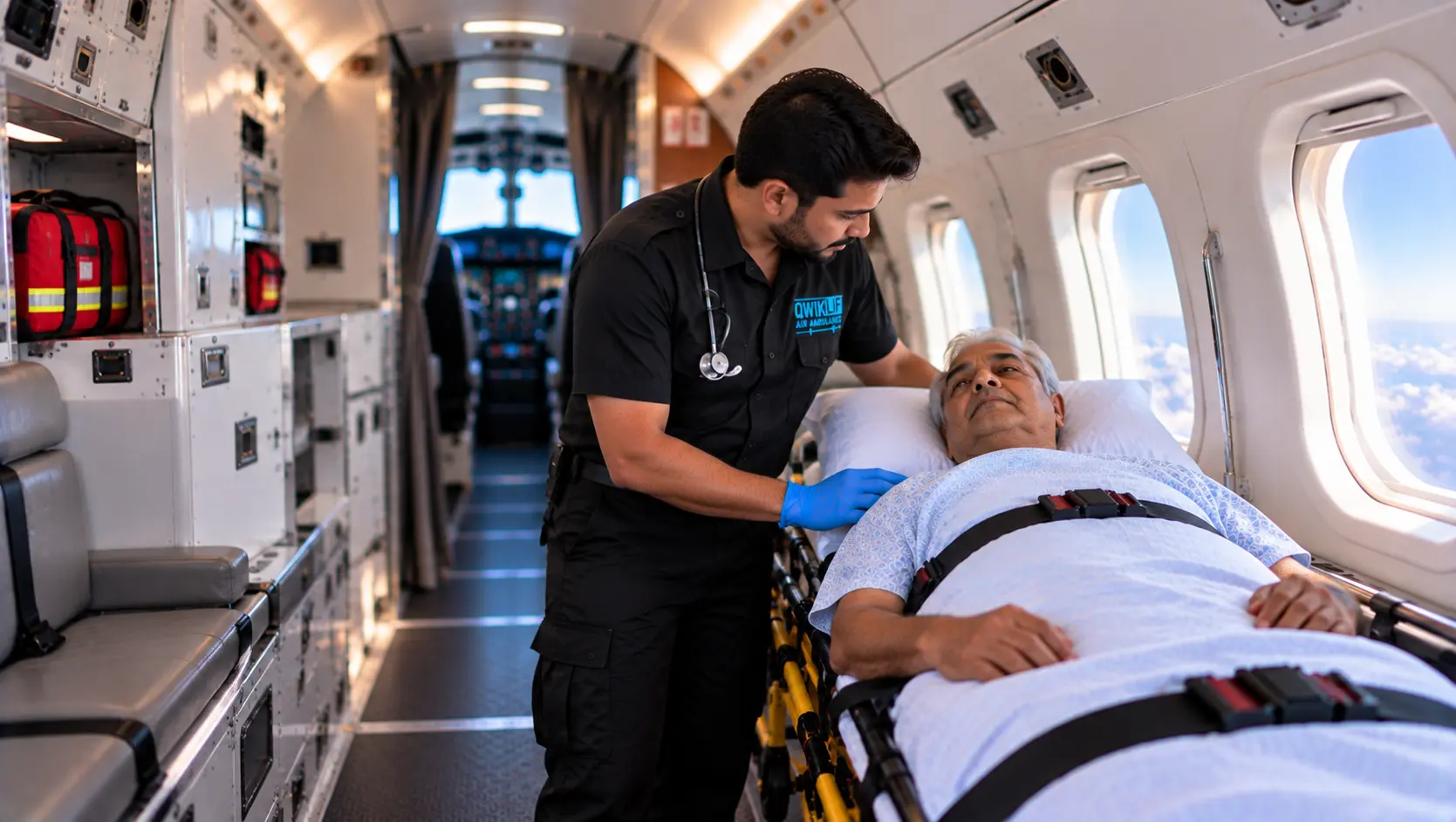
As people age, certain medical conditions may make long-distance travel difficult or unsafe. When an elderly patient needs to travel for treatment, return home, or move between hospitals, an air ambulance for elderly patients can provide continuous medical support throughout the journey.
Air medical transport is planned according to the patient's medical condition, mobility, medications, and care requirements.
When Might an Elderly Patient Need an Air Ambulance?
An air ambulance may be considered when an elderly patient:
- Requires continuous medical monitoring during travel
- Has recently undergone major surgery
- Needs oxygen or respiratory support
- Has limited mobility or is bedridden
- Requires a ventilator or other critical-care equipment
- Needs to travel between hospitals for specialized treatment
- Is medically unable to travel safely on a regular commercial flight
The appropriate mode of transportation depends on the patient's condition and medical assessment.
Medical Assessment Before the Flight
Before an air ambulance transfer, the medical team reviews the patient's current condition and travel requirements. This can include medical history, recent reports, medications, vital signs, oxygen requirements, mobility, and the level of care needed during transportation.
This assessment helps determine the appropriate aircraft, medical equipment, and medical team for the journey.
Medical Support During Air Ambulance Transport
Elderly patients may require additional attention during a long-distance transfer. Depending on their condition, the medical team may provide:
- Continuous vital-sign monitoring
- Oxygen support
- Medication administration
- Cardiac monitoring
- Ventilator support when required
- Infusion and syringe pumps
- Assistance with repositioning and comfort
- Critical-care support throughout the journey
The equipment and personnel are selected according to the patient's individual medical needs.
Why Planning Is Important
International patient transfers can involve several arrangements, including medical clearance, ground ambulance coordination, flight planning, medical equipment, documentation, and hospital coordination.
Planning these requirements in advance helps reduce avoidable complications and ensures that the patient's medical needs are considered throughout the transfer.
Choosing the Right Air Medical Transport
Families should consider whether the provider can arrange bed-to-bed patient transfer, appropriate medical supervision, ground ambulance coordination, and the equipment required for the patient's condition.
For international journeys, experience with cross-border medical transportation can also be important because the transfer may involve coordination between hospitals, medical teams, airlines, and other relevant authorities.
Air Ambulance for Elderly Patients with QwikLif
QwikLif Air Ambulance coordinates international medical transportation for patients who require supervised travel. Services include dedicated air ambulance, commercial airline patient transfers, medical escorts, and specialized transfers for patients requiring advanced medical support.
For an elderly patient, the transportation plan can be coordinated around their medical condition and level of care required during the journey.
Conclusion
Age alone does not determine whether an elderly patient needs an air ambulance. The patient's medical condition, mobility, treatment requirements, and ability to tolerate the journey are important factors.
A proper medical assessment and careful planning can help families choose an appropriate and medically supervised method of transportation for long-distance travel.