
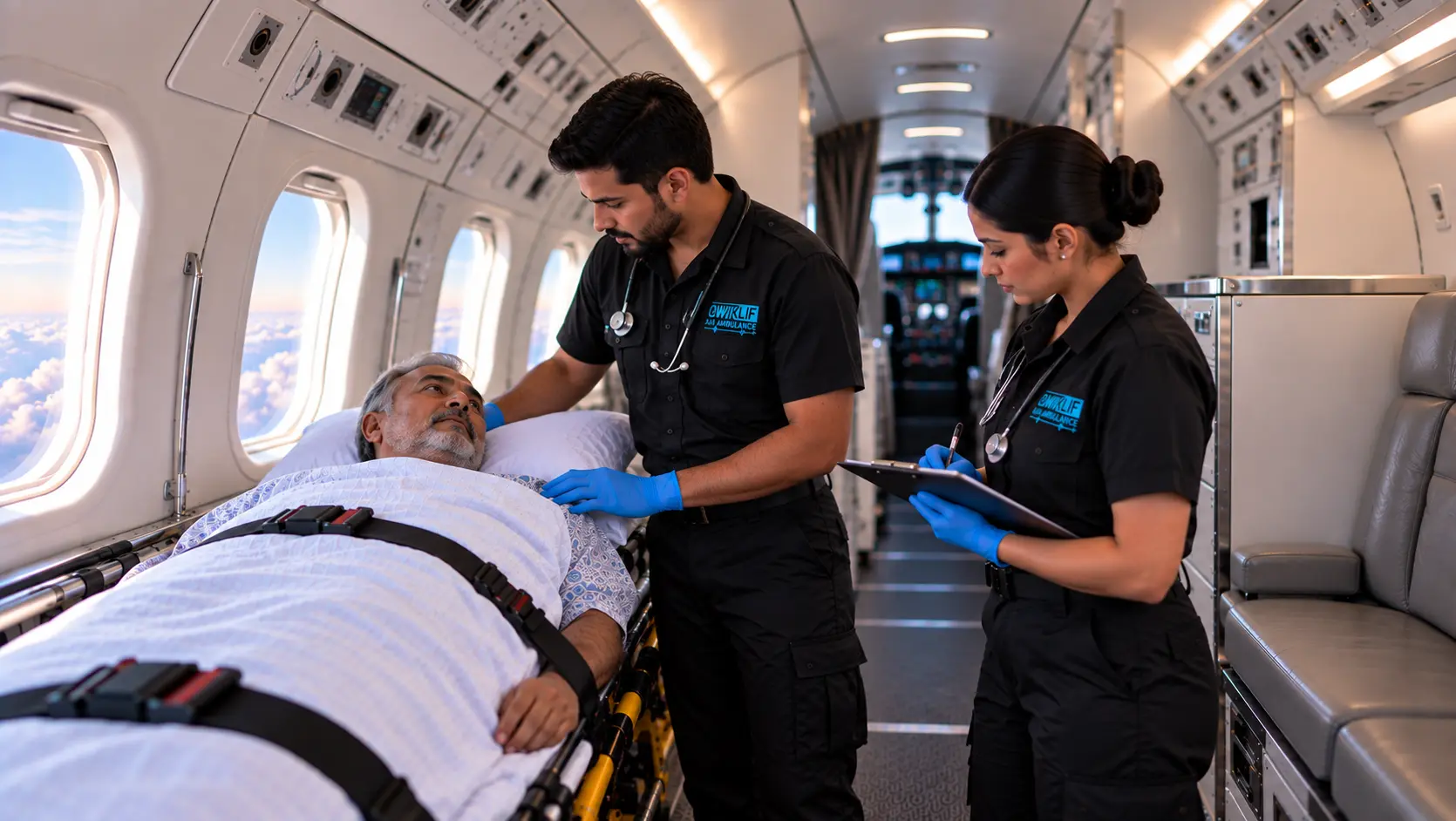
Cancer patients may sometimes need to travel long distances for specialised treatment, hospital transfers, or to return to their home country. When ordinary travel is unsuitable, an air ambulance for cancer patients can provide medically supervised transportation based on the patient's condition and care requirements.
When Is an Air Ambulance Needed for Cancer Patients?
An air ambulance may be considered for patients who:
- Need transfer to a specialised oncology hospital.
- Require medical supervision during long-distance travel.
- Experience significant weakness or mobility difficulties.
- Need oxygen, monitoring, or other medical support.
- Require medical repatriation after treatment or hospitalisation.
The appropriate transport option depends on the patient's medical assessment and treating doctor's advice.
Types of Air Medical Transport for Cancer Patients
Dedicated Air Ambulance
A dedicated air ambulance may be suitable for patients who require specialised medical support during the journey. Depending on their condition, the transfer may include a medical team, stretcher, monitoring equipment, oxygen, and other necessary equipment.
Commercial Stretcher Transfer
A commercial stretcher transfer may be considered for patients who cannot sit upright but are medically suitable for travel on an approved commercial airline. Airline approval and medical clearance are required.
Commercial Medical Escort
Patients who are stable enough to travel in a passenger seat may be able to travel with a medical escort for assistance and supervision.
Air Ambulance for Chemotherapy and Post-Surgery Patients
Patients undergoing chemotherapy or recovering from cancer surgery may need additional assessment before travelling. Treatment side effects, pain, fatigue, infection risks, mobility, and medication requirements should be reviewed by the medical team.
A medical flight for cancer patients can be planned according to the patient's condition, required support, and journey duration.
International Air Ambulance for Cancer Patients
International cancer patient transfers may involve travel to a specialist hospital, transfer between healthcare facilities, or medical repatriation.
A typical transfer plan may include:
- Reviewing medical reports and assessing fitness to travel.
- Coordinating with the treating and receiving hospitals.
- Selecting a suitable aircraft or commercial transport option.
- Arranging medical personnel, equipment, and ground ambulances.
- Coordinating necessary travel documents and approvals.
Bed-to-Bed Medical Transfer
A bed-to-bed air ambulance transfer can coordinate transportation from the patient's hospital or residence to the receiving facility. Depending on the patient's needs, this may include ground ambulance services, airport transfers, medical supervision during the flight, and hospital handover.
Air Ambulance for Cancer Patients with QwikLif
QwikLif Air Ambulance coordinates international air medical transportation, including dedicated air ambulance services, commercial stretcher transfers, medical escorts, and ground ambulance arrangements.
Each enquiry is reviewed individually to understand the patient's condition, travel requirements, and recommended level of medical support.
Conclusion
An air ambulance for cancer patients can provide a medically supervised transportation option for individuals who need to travel for treatment, hospital transfers, or repatriation. Medical assessment and careful coordination help determine the appropriate transport option for each patient.
Contact QwikLif Air Ambulance to discuss the patient's condition, current location, destination, and medical transportation requirements.