
- March 24, 2026
- admin
- Comment: 0
- Dedicated Air Ambulance by Qwiklif
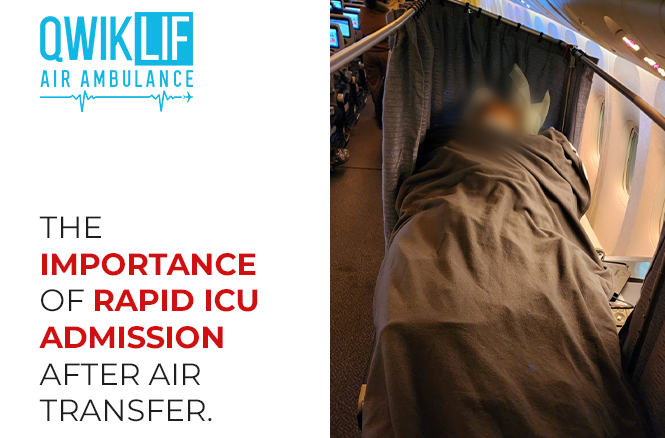
Transporting critically ill patients via air ambulance services is only one part of the overall medical journey. While air medical transport ensures fast and safe relocation, the moments immediately after landing are equally crucial. For patients in serious or unstable condition, timely access to an intensive care unit (ICU) can significantly influence recovery and survival. At Qwiklif Air Ambulance, ensuring rapid ICU admission after air transfer is a vital component of delivering seamless and effective critical care transport.
The Critical Window After Landing
Patients transported via air ambulance are often dealing with life-threatening conditions such as cardiac emergencies, severe trauma, respiratory failure, or neurological complications. Even after a stable flight, their condition can change quickly if not monitored closely.
Any delay in transferring the patient to an ICU facility may result in:
- Deterioration of vital signs
- Increased risk of medical complications
- Delayed access to life-saving interventions
- Reduced chances of recovery
This makes immediate and efficient post-flight critical care essential.
Seamless Bed-to-Bed Patient Transfer
A key aspect of high-quality air ambulance services is the ability to provide a smooth bed-to-bed patient transfer. This means that from the moment the patient leaves the originating hospital to their arrival in the receiving ICU, there is no interruption in medical care.
At Qwiklif Air Ambulance, this process involves:
- Pre-confirmation of ICU bed availability
- Coordination with receiving hospital teams
- Immediate ground ambulance transfer upon landing
- Continuous medical supervision throughout the journey
This ensures a seamless transition into intensive care treatment without delays.
Maintaining Continuity of Critical Care
During the transfer from aircraft to hospital, maintaining consistent ICU-level care is critical. Patients may depend on advanced life-support systems, medications, and constant monitoring.
Qwiklif’s flight doctors and flight nurses ensure:
- Continuous vital sign and cardiac monitoring
- Safe handling of ventilators and medical equipment
- Ongoing administration of medications and IV therapy
- Clear and structured handover communication to ICU staff
This uninterrupted critical care support prevents complications during the transition phase.
Coordination Between Air and Ground Teams
Efficient post-flight medical coordination is essential to achieve rapid ICU admission. Multiple teams must work together seamlessly, including:
- Flight medical teams
- Ground ambulance services
- Hospital emergency and ICU staff
- Air ambulance operations teams
At Qwiklif Air Ambulance, all stakeholders are aligned before the aircraft lands, ensuring that the patient is received and transferred to the ICU without delay.
Improving Outcomes Through Timely ICU Care
Quick access to an intensive care unit after air ambulance transfer allows for immediate continuation of advanced treatment, close monitoring, and rapid response to any complications. This significantly improves patient outcomes and reduces the risk of further deterioration.
Through precise coordination, experienced medical teams, and a strong focus on continuity of care, Qwiklif Air Ambulance ensures that patients receive the highest level of support from departure to ICU admission.
Because in critical care, what happens after landing can be just as life-saving as the flight itself.