- March 11, 2026
- admin
- Comment: 0
- Dedicated Air Ambulance by Qwiklif
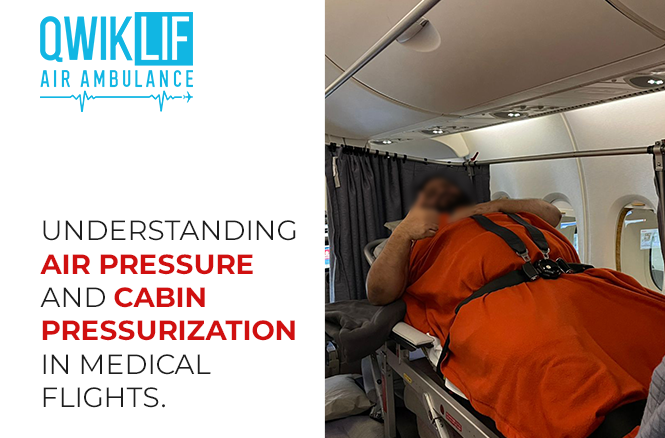
Air medical transport plays a crucial role in transferring critically ill patients across long distances. One of the most important factors affecting patient safety during flight is air pressure and cabin pressurization. Changes in altitude can influence oxygen levels and the behavior of gases in the body, making careful monitoring essential. Qwiklif Air Ambulance ensures that these factors are carefully managed to maintain patient stability throughout medical flights.
The Impact of Air Pressure at Altitude
As an aircraft climbs, atmospheric pressure decreases, which can affect how oxygen is delivered to the body. Lower pressure means there is less oxygen available in the air, which may pose risks for patients with respiratory or cardiovascular conditions. For critically ill patients, maintaining proper oxygen levels becomes a top priority during air transport.
To address this, medical teams closely monitor oxygen saturation and adjust oxygen delivery when needed. Qwiklif Air Ambulance uses advanced medical equipment to ensure patients receive adequate oxygen support during the entire journey.
What Is Cabin Pressurization?
Most medical aircraft are equipped with cabin pressurization systems, which regulate the internal cabin pressure to simulate conditions closer to those on the ground. Typically, aircraft cabins are pressurized to an equivalent altitude of around 6,000 to 8,000 feet. This controlled environment helps reduce the physiological stress that patients might otherwise experience at higher altitudes.
By maintaining a stable cabin environment, Qwiklif Air Ambulance ensures that patients, especially those requiring critical care, remain as comfortable and stable as possible during transport.
Effects on Medical Conditions
Changes in pressure can also affect gas expansion in the body, which may influence certain medical conditions. For example, trapped gases in body cavities or medical devices can expand as pressure decreases. This is why patients with conditions such as recent surgeries, chest injuries, or certain lung problems require careful medical evaluation before flight.
Medical teams take these factors into account when planning the transfer and prepare the necessary equipment and monitoring systems to manage potential complications.
Continuous Monitoring and Safety
During flight, continuous monitoring of vital signs and oxygen levels is essential. Medical crews closely observe patients to ensure that any changes in respiratory or cardiovascular status are addressed immediately.
With trained medical professionals and specialized aircraft systems, Qwiklif Air Ambulance ensures that cabin pressure, oxygen delivery, and patient stability are maintained throughout the flight.
Conclusion
Understanding air pressure and cabin pressurization is essential for safe and effective air medical transport. Changes in altitude can significantly impact patient physiology, particularly for those with critical medical conditions. Through advanced technology, careful planning, and skilled medical teams, Qwiklif Air Ambulance ensures that patients receive safe, stable, and reliable care during every medical flight.