- November 7, 2025
- admin
- Comment: 0
- Dedicated Air Ambulance by Qwiklif
When a global pandemic strikes, the world’s healthcare systems are pushed to their limits. Hospitals overflow, travel restrictions tighten, and the need for rapid, safe medical transport becomes more urgent than ever. In such times, air ambulances play an indispensable role — bridging gaps in care, connecting isolated regions, and ensuring critically ill patients receive timely, life-saving treatment.
Rapid Response in a Crisis
During pandemics like COVID-19, Ebola, or SARS, the speed of response can mean the difference between containment and chaos. Air ambulances provide an essential advantage: mobility without boundaries. While traditional ground ambulances are limited by distance and terrain, air ambulances can evacuate patients across countries or continents within hours.
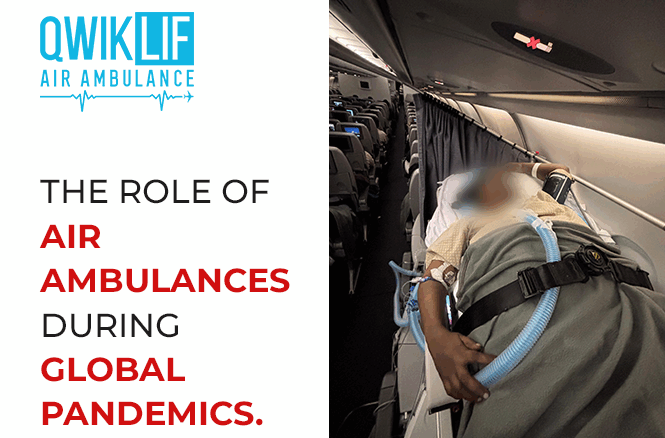
Equipped with advanced life support (ALS) systems, ventilators, and intensive care equipment, these aircraft function as flying ICUs, allowing medical teams to deliver hospital-grade care mid-flight. For Qwiklif Air Ambulance, this means being able to transfer infectious patients safely, without disrupting healthcare facilities or risking further transmission.
Safe Transport of Infectious Patients
One of the biggest challenges during pandemics is the safe transport of contagious individuals. Qwiklif and other leading providers use isolator units or biocontainment pods, which prevent airborne pathogens from escaping during transit.
Medical crews undergo specialized infection control training, wear personal protective equipment (PPE), and follow strict disinfection protocols before and after each mission. Every precaution ensures that patients, crew, and receiving hospitals remain protected from cross-contamination.
This ability to move infectious patients safely allows healthcare systems to redistribute cases, ensuring hospitals are not overwhelmed and that patients receive the right level of care where it’s most available.
Supporting Healthcare Systems Under Pressure
Beyond transporting patients, air ambulances also play a logistical support role during pandemics. They can deliver medical supplies, vaccines, test kits, and emergency medical personnel to remote or overwhelmed regions.
During COVID-19, for example, air ambulances were crucial in repatriation missions, moving critical patients to specialized centers, and airlifting doctors and nurses to hotspot areas. This mobility helped maintain continuity in care and allowed healthcare systems to function despite immense strain.
Preparedness for Future Pandemics
If the last few years have taught us anything, it’s that pandemic preparedness is not optional. Air ambulance services like Qwiklif Air Ambulance are investing in dedicated infectious disease response units, aircraft customization, and training for pandemic protocols to ensure future readiness.
By combining aviation technology, medical excellence, and emergency coordination, Qwiklif ensures that even in the face of a global crisis, no patient is left without access to critical care.
A Lifeline in the Sky
In every pandemic, air ambulances have proven to be more than just transport — they are a lifeline that connects hope with healing. Their ability to overcome borders, time constraints, and medical challenges makes them an irreplaceable asset in the global fight against infectious diseases.
In the world’s darkest hours, it’s not just about flying patients — it’s about flying hope.